
Funeral Etiquette in South Yorkshire: What to Wear, Say & Expect
Most people attending a funeral are worried about the same thing: getting it wrong. The truth is, if you’re reading this, you’re already doing the right thing.
- Dress thoughtfully – dark and smart is the default, but always follow the family’s wishes if they’ve asked for something different.
- Arrive a few minutes early – it’s a small thing, but it matters. Turn your phone off before you go in.
- Don’t overthink what to say – short, sincere words are better than perfect ones. And simply being there speaks volumes.
Table of Contents
We Get Asked This All the Time
Most of us don’t attend funerals very often. And when the time comes, it’s natural to feel uncertain, unsure of what to wear, what to say, whether you’re sitting in the right place, or whether you’ll somehow make an already difficult day harder.
We hear it all the time at Bartholomew & Sons. People arrive at our doors not just to arrange funerals, but to ask quietly: “What am I supposed to do?”
After more than 135 years supporting families across Rotherham, Maltby, and the wider South Yorkshire community, here’s what we can tell you with confidence: there is no script, and there are no strict rules. Funeral etiquette isn’t about performance or protocol. It’s about turning up with kindness, taking your cues from the family, and being a gentle, steady presence for the people who need it most.
If you’re attending a funeral in South Yorkshire – whether it’s a traditional church service, a cremation, a graveside burial, or a celebration of life – this guide will walk you through everything you need to know, so you can focus on what actually matters.

What Is Funeral Etiquette?
Funeral etiquette refers to the customs and behaviours that are generally considered respectful when attending a funeral service. That includes things like dress code, where to sit, whether to bring flowers, and how to speak to grieving family members.
Every funeral is different. Some are traditional and formal – a church service in Rotherham Minster followed by a burial at Moorgate Cemetery, for example. Others are more relaxed celebrations of life, held at a local venue with music, colour, and laughter alongside the tears.
In our experience, families rarely expect perfection from those who attend. Most are simply grateful that you came.
Different types of funeral can have different customs and expectations. You can read more about the funeral types available and how they can be personalised to reflect the person who has died.
Funeral Etiquette: What is usually Appropriate?
If you’re unsure about what is expected when attending a funeral, the table below provides a simple overview of common funeral etiquette and what is generally best avoided.| Situation | Usually Appropriate | Best Avoided |
|---|---|---|
| Clothing | Smart, respectful clothing | Very casual dress, unless specifically requested |
| Phone use | Silent or switched off | Taking calls during the service |
| Seating | Leaving front rows for close family | Sitting in reserved family areas |
| What to say | Offer simple, sincere condolences | Overly personal or forceful advice |
| Wake attendance | Attending if invited | Assuming every wake is public |
What Should You Wear to a Funeral in South Yorkshire?
For most funerals, smart and respectful clothing is the right call. Black is still the most traditional choice, though dark navy, grey, and other muted tones are widely accepted too.
Some families – particularly those arranging a celebration of life – may specifically request brighter colours or more relaxed dress. If this is mentioned in the funeral notice or order of service, please do follow their wishes. It’s a meaningful thing to them.
A practical note: churches, crematoriums, and cemeteries across South Yorkshire can be cold, especially from October through to April. A warm coat and comfortable shoes are worth thinking about.

Funeral Dress Code at a Glance
What you wear will depend on the type of funeral and any wishes expressed by the family. The table below provides a quick guide to what is generally considered appropriate for different types of services.
| Situation | Usually Appropriate |
|---|---|
| Traditional church service | Smart, respectful clothing in dark or muted colours |
| Crematorium service | Smart and respectful; muted colours |
| Celebration of life | Follow family wishes; brighter colours may be requested |
| Graveside burial | As above, plus practical footwear for outdoors |
| Wake / reception | Smart-casual is usually fine |
| Religious or cultural service | Research specific customs, or ask the funeral director |
Should You Attend a Funeral?
Unless the family has specifically requested a private service, funerals are generally open to friends, neighbours, colleagues,and anyone who cared about the person who has died.
If you are unsure whether you should attend, think about your connection to the person or the family. In most cases, your presence will be appreciated far more than you realise. Many families tell us afterwards how much it meant to see people they didn’t necessarily expect to come.
That said, if the notice says “family only” or “private funeral”, those wishes should always be respected. If you’re genuinely unsure, a simple phone call or message to the family – or to us – can help you decide.
What Should You Say at a Funeral?
This is the one that worries people most. And the reassuring truth is: you don’t need to find the perfect words.
Simple and sincere is always enough. Things like:
- “I’m so sorry for your loss.”
- “They meant so much to a lot of people.”
- “We’re thinking of you and your family.”
- “I just wanted to be here — you don’t have to say anything.”
You don’t need to explain your relationship, recount memories, or fill the silence. Grief is exhausting, and most families are grateful for a kind word and a warm hand, not a speech.
If you’re worried about saying the wrong thing, sometimes just saying “I don’t know what to say, but I’m here” is the most honest and comforting thing of all.
Should You Bring Flowers, Cards or Donations?
Many families include clear guidance in the funeral notice about what they’d prefer. Some request “family flowers only” and ask for donations to a charity instead. Others welcome flowers from everyone.
If in doubt, a heartfelt sympathy card is always appropriate – and always appreciated, even if it arrives a few weeks after the funeral. Grief doesn’t stop when the service ends.
One thing worth mentioning: tipping funeral staff is not expected in the UK, and is not something families need to worry about. If you’d like to express appreciation to a funeral director or their team, a kind message or a card is more than enough.
Flowers are just one of the ways a service can reflect the person being remembered. You can find more ideas in our guide to personalising a funeral.
When This Guide May Not Apply
This guide covers general funeral etiquette as it’s most commonly observed across South Yorkshire. But there are situations where different customs and traditions apply, including:
- Religious funerals – Jewish, Muslim, Hindu, Sikh, and other faiths each have their own traditions around dress, behaviour, and attendance.
- Cultural funerals – customs vary widely across different communities.
- Military or ceremonial funerals – these follow a specific order and protocol.
- Private or invitation-only services – always follow the wishes stated in the notice.
If you’re attending a funeral that follows traditions you’re not familiar with, it’s always fine to ask the funeral director for guidance beforehand. We’re happy to help.
What Happens After the Funeral?
Once the service ends, the immediate family usually leave first, followed by other mourners. Depending on the arrangements, guests may then make their way to the burial, crematorium grounds, or wake venue.
Depending on the arrangements, guests may then make their way to the burial, crematorium grounds, or wake venue. If you’re unfamiliar with the differences between the two options, our guide to burial vs cremation explains what each involves.
Funeral Wake Etiquette in the UK
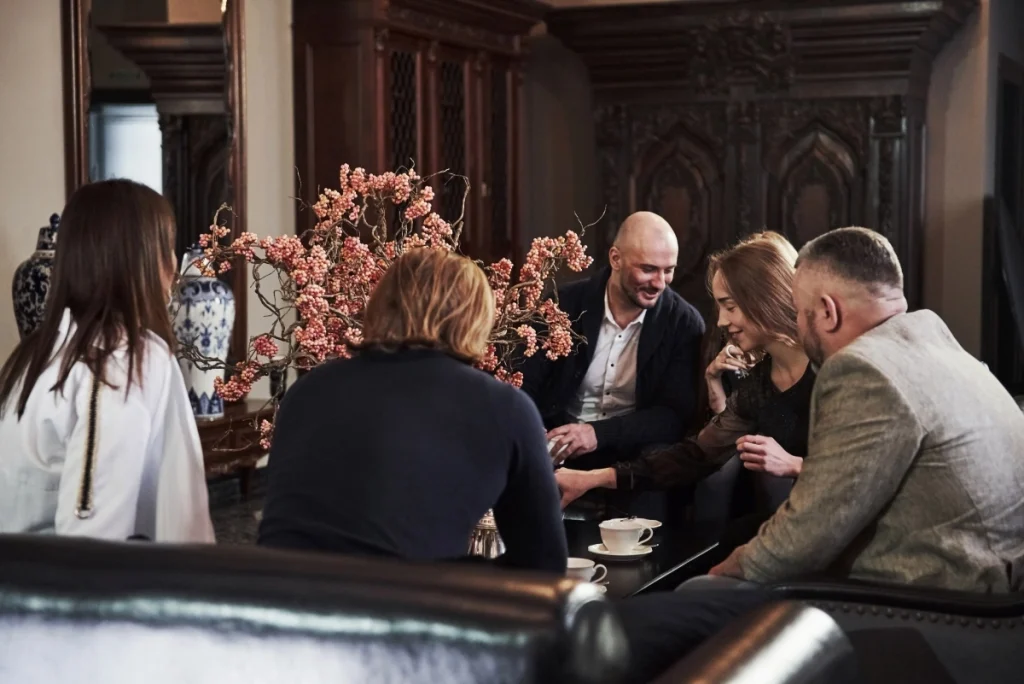
After the service, many funerals in South Yorkshire include a wake – a gathering where people can spend time together, share memories, and support one another more informally. Wakes are held in all sorts of places: village halls, family pubs, social clubs, or at home.
The atmosphere is usually warmer and more conversational than the service itself. Some wakes are open to everyone who attended the funeral; others are for close family and friends only. If you’re not sure, it’s fine to quietly check.
If you’ve been invited, it’s generally polite to go along, even if only for a short while. Families often find the wake one of the most comforting parts of the day, a chance to laugh and remember, as well as grieve.
Don’t Forget the Days and Weeks That Follow
It’s worth remembering that support often becomes more valuable in the days and weeks after the funeral, once the activity dies down and families are left with the quieter weight of grief. A phone call, a card, a home-cooked meal, or simply popping round for a brew can mean the world during that time.
A Note From Us at Bartholomew & Sons
We’ve been doing this job in Rotherham and South Yorkshire since 1891 – and across all of those years and all of those families, the one thing that’s always been true is that showing up, in whatever way you can, is what matters.
No one expects you to say exactly the right thing or know every custom. What families remember is that you were there.
If you have any questions about attending a funeral – or about anything else to do with funeral arrangements – please don’t hesitate to get in touch with our team. We’re here to help, and there’s no question too small.
FAQs
Proper funeral etiquette generally means dressing respectfully, arriving a few minutes early, keeping your phone switched off, and offering sincere condolences to the family. Beyond that, follow the tone of the service and the wishes of the family - that's all anyone expects.
Dark, smart clothing is the traditional choice - black, navy, or grey. Some families, particularly for celebrations of life, may request brighter colours; if so, this will usually be mentioned in the funeral notice. Practical footwear is worth thinking about, especially for outdoor services.
Using your phone during the service, arriving late without a quiet apology, making remarks that draw attention away from the family, or ignoring specific requests in the funeral notice (such as flowers or private attendance) are all things best avoided.
Immediate family members are typically seated at the front of the service and lead the procession. However, every family is different, and arrangements are always guided by what feels right for those who are grieving. There are no hard rules.
No - tipping funeral staff is not expected in the UK. If you'd like to express appreciation, a thank-you card or a kind word to the funeral director is entirely appropriate and genuinely valued.
Something simple is always best. "I'm so sorry for your loss" or "I just wanted to pay my respects" are both perfectly right. You don't need to explain who you are or fill the silence, a warm expression of sympathy is enough.
Yes, in most cases. Unless the notice specifies a private or family-only service, funerals are generally open to anyone who knew the person or wants to support the family. Families often find it comforting to see people they didn't necessarily expect.
Bartholomew & Sons are independent family funeral directors serving Rotherham, Maltby, and across South Yorkshire. We’ve been supporting local families since 1891. If you need guidance or simply want to talk, please call us on 01709 363706 or visit one of our funeral homes.
Or, if you’d prefer, you can send us a message through our contact form and a member of our family will be in touch.